
Archive review: This retrospective assessment uses surviving Hirst & Hirst records and contemporary press material. It is not a claim that the product is currently stocked or newly tested.
What was it?
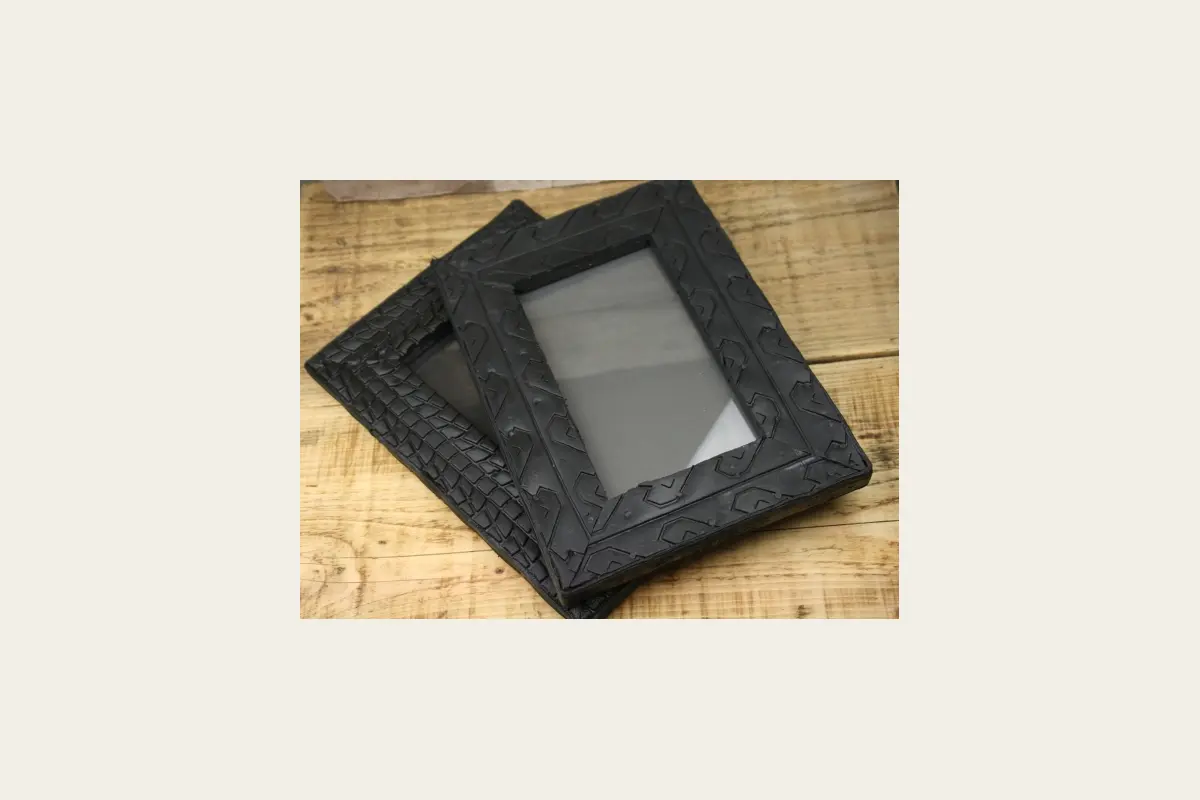
This black frame used reclaimed tyre rubber to create a carved-looking, deeply textured border. Hirst & Hirst highlighted reused-tyre frames alongside rubber trugs and buckets as products that were both useful and designed with future material needs in mind.
Design and usefulness
The tread-like surface gives the frame a strong presence, particularly around monochrome photography or simple graphic artwork. It avoids the smooth, anonymous look of mass-market plastic frames and communicates its source material immediately.
What worked
- Makes visible use of reclaimed material
- Bold texture suits simple artwork
- Durable-looking surface
- Each example is likely to have slight variation
Points to consider
- Dark frame can dominate delicate images
- Rubber condition may vary with age
- Maker and full dimensions are not confirmed
Buying or collecting one today
Inspect older examples for surface tackiness, cracking or odour, and check the rear stand and glazing rather than focusing only on the decorative front.
Hirst & Hirst verdict
A convincing example of recycled material becoming the design feature rather than an apology.
Primary archive source: view the surviving Hirst & Hirst record.
Archive & sourcing note
Retrospective archive review. Hirst & Hirst no longer sells this product and has not retested a current example.
View the surviving Hirst & Hirst archive source (opens original archive).